Computational Complexity & Empirical Cryptanalytic Evaluation
This report is based on the analysis of architecture, tutorial and the test reports of DELOL Shield.
The Test Reports considered in the analysis are:
- ChatGPT Assisted DELOL Shield Cryptography Test Report
- Grok Assisted DELOL Shield Black-Box Cryptanalytic Test Report
- Sarvam AI Assisted DELOL Shield Cryptography Test Report
Based on the analysis it was evaluated that DELOL Shield demonstrates strong empirical resilience against modern algebraic, statistical, and privileged multi-sample cryptanalysis by replacing rigid algebraic cipher grids with an unstructured combinatorial permutation architecture.
Evaluated through the lens of computational complexity theory (P vs. NP and VP vs. VNP) and corroborated by three independent AI-assisted adversarial assessments (Grok 4.5, ChatGPT / GPT-5.6 Luna, and Sarvam Indus AI), DELOL Shield maintains a sharp computational divide between fast, deterministic authorized recovery and computationally intractable unauthorized reconstruction.
DELOL Shield Architectural Paradigm
Combinatorial “Jigsaw” vs. Algebraic “Rubik’s Cube”
Conventional cryptographic standards (such as AES, RSA, and ECC) operate like a Rubik’s Cube i.e. a rigid mathematical group where every transformation obeys uniform algebraic rules.
While strong against classical brute force, algebraic uniformity exposes systems to mathematical equation-solving and quantum algorithms (such as Shor’s algorithm).
In contrast to that, this diagram illustrates the Jigsaw paradigm DELOL Shield’s Cryptographic Structure.
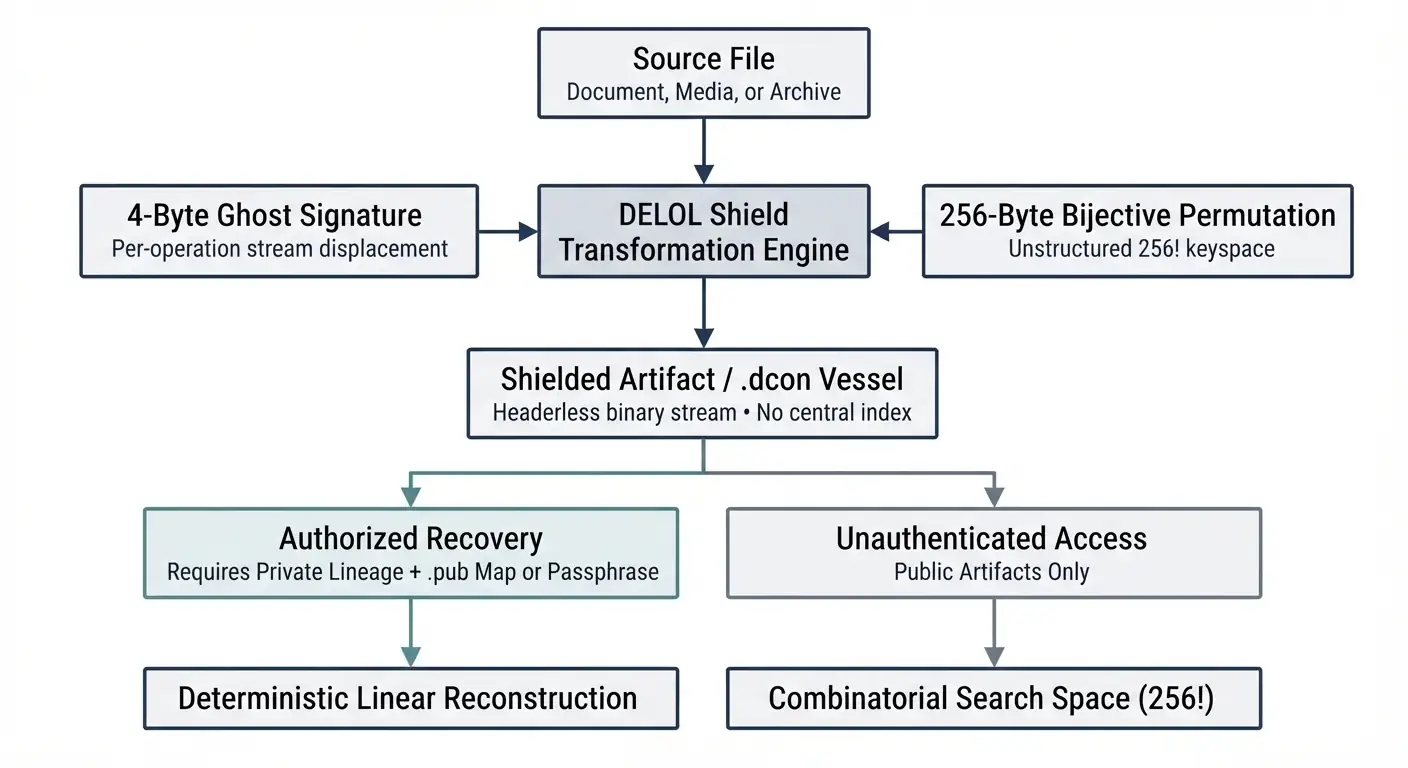
Figure 1: DELOL Shield Architectural and Functional Structure
DELOL Shield operates on an unstructured Jigsaw Paradigm:
- Unstructured 256! Keyspace: Rather than relying on prime factorization or elliptic curves, DELOL Shield utilizes a complete 256-byte bijective permutation (0x00–0xFF), creating a combinatorial search space of 256! ≈ 8.57 × 10^506 possible states.
- Per-Operation Ghost Signature: Each shielding operation injects a random 4-byte Ghost Signature, ensuring that shielding the identical source file multiple times produces distinct structural layouts that cannot be overlaid or aligned.
- Headerless Sequential Displacement: Multi-file .dcon Convoy vessels eliminate traditional central directories and file-type magic bytes, preventing automated file carving or structural boundary detection.
Mapping DELOL Shield to Complexity Theory
1. Theoretical Framework: P vs. NP (Search vs. Verification)
Core Question:
Can a problem whose solution is fast to verify also be solved quickly without the key?
Application to DELOL Shield:
- Authorized Recovery (P): Legitimate recipients holding the authorized key material and offline decoder recover files deterministically in linear time.
- Unauthorized Attack (NP): Without the private lineage, attackers face an unstructured 256! combinatorial search space with no known polynomial-time shortcut.
2. Theoretical Framework: VP vs. VNP (Algebraic Compression)
Core Question:
Can a complex transformation be simplified into a low-cost polynomial formula?
Application to DELOL Shield:
- Resistance to Formula Reduction: Because the byte mapping is arbitrary rather than algebraic, the transformation resists reduction into linear XOR streams, affine shifts, or polynomial circuits.
3. Theoretical Framework: Quantum Resilience
Core Question:
Do quantum algorithms bypass the underlying math?
Application to DELOL Shield:
- No Algebraic Trapdoor: Because security does not rely on hidden subgroup problems, Shor’s algorithm provides no exponential shortcut; even Grover-style quantum search remains bounded above 10^253 operations.
Summary of Independent Adversarial Verification
Across three independent evaluations (Grok 4.5, ChatGPT / GPT-5.6 Luna, and Sarvam Indus AI), cryptanalytic agents were placed in privileged adversarial roles, simulating an attacker who has intercepted multiple transmissions and obtained public key artifacts.
Test Conditions
Adversaries were provided with:
- Multi-Sample Ciphertexts: Four independently shielded versions of the exact same underlying source file (car.dat, cart.dat, metro.dat, rat.dat).
- Public Key Material: The 256-byte Public Lineage Map (key.dat).
- Multi-File Container: A headerless .dcon Convoy vessel (convoy.dcon).
Verified Findings
- Failure of Algebraic & Statistical Solvers: Across more than 15,000 automated candidate transformations, which includes the direct and inverse substitution using key.dat, rolling XORs, Vigenère ciphers, RC4-style state tables, and affine positional mappings, concluded in “Zero bytes of coherent plaintext were recovered”.
- Resistance Under Progressive Disclosure: Evaluated across five escalating privilege tiers (from blind ciphertext analysis to full architectural disclosure with public key exposure), the 256-byte .pub Lineage Map was confirmed to be a valid permutation that does not function as a standalone decryption table.
- Surface Residue Does Not Yield Plaintext: While structural analysis observed that shielded plain-text files retain printable ASCII character distributions and a 256-byte periodicity, differential comparison across all four versions of the same source file yielded low byte-identity rates and failed to isolate the Ghost Signature or recover original text.
Verification Scope & Boundaries
For accurate public interpretation, DELOL Shield’s verification posture distinguishes between empirical cryptanalytic resistance and formal mathematical proof:
- Empirical Hardness: The published reports establish that current statistical, differential, and algebraic cryptanalytic techniques fail to recover protected data even under privileged multi-sample conditions.
- Defense-in-Depth Architecture: DELOL Shield pairs high-entropy combinatorial keys (256!) with a proprietary execution engine. While this prevents adversaries from constructing white-box algebraic equations directly from public blueprints, formal academic proof of universal non-invertibility remains distinct from empirical adversarial testing.
Conclusion
DELOL Shield demonstrates that decoupling data protection from rigid algebraic structures creates a measurable computational divide between authorized recovery and unauthorized reconstruction.
By combining a 256-byte bijective permutation (256!) with a per-operation 4-byte Ghost Signature and headerless Sequential Displacement, the system avoids the uniform mathematical patterns that allow conventional ciphers to be simplified into algebraic equations (VP) or targeted by quantum shortcuts.
Authorized recipients holding the private lineage or passphrase can restore files deterministically in linear time (P).
Without that authorization, even someone holding multiple shielded copies of the same file and the Public (.pub) Lineage Map is left facing an unstructured combinatorial search (NP).
Three independent AI-assisted cryptanalytic assessments put this boundary to the test. Even as evaluators were given progressive access to public key artifacts and multiple shielded copies of the same file, more than 15,000 automated statistical, differential, and algebraic attacks failed to recover a single byte of readable text. While no empirical test can replace a formal mathematical proof of non-invertibility, these results and the underlying combinatorial design show that DELOL Shield provides a practical, high-entropy defense built for long-term data protection.
Book a Demo
If your organisation deals with high sensitive assets and IP and want to explore this opportunity then feel free to schedule a call to witness the importance of this infrastructure in action.
Join Us As Authorized Distributors
This is a Channel Partnership Invitation for those MSMEs, Enterprises, Proprietary Firms and Individual Consultants as Authorized Distributors to resell our DELOL Shield Platform.